.svg)


.png)
.png)
.png)
.png)
.png)
©2024 SEDA. All rights reserved.


Introducing SEDA Sophon

News & Updates

SEDA Sophon is a specialized Solver purpose-built for Hyperliquid’s HIP-3 market structure. Unlike the standard SEDA Core update process, Sophon bypasses the secondary batch update and delivers results directly to HyperCore via an Authenticated Endpoint.
Sophon enables low-latency updates while maintaining full programmability through Oracle Programs. Sophon is designed to fetch the latest output from an Oracle Program as soon as the Overlay commit–reveal cycle is completed, publishing updates directly after the reveal and tally phase. This can reduce latency from four blocks to per-block updates, with a clear roadmap toward sub-second latency as block times are further optimized.
This article explores Hyperliquid’s HIP-3 market structure and new methods for improving the frequency of data updates for illiquid assets on HIP-3.
SEDA Core
SEDA is a layer one blockchain purpose-built for oracle infrastructure. The SEDA Network architecture consists of three interdependent subsystems:
SEDA Chain — the canonical ledger where data request settlement occurs. This ensures that every data request is recorded, validated, and economically finalized under Byzantine fault-tolerant consensus.
Overlay Network — a distributed system responsible for HTTP fetches from arbitrary public or private data sources. This enables the ingestion of both permissionless and permissioned information streams into the SEDA ecosystem.
Solver Network — a specialized routing layer tasked with forwarding data requests from origin networks → into SEDA → and back to the origin networks. This network ensures trustless bidirectional data flow across blockchain environments and SEDA.
At the application layer, Oracle Programs are deployed as customizable smart contracts. Unlike static price feeds, Oracle Programs allow developers to:
- Define bespoke data aggregation methodologies.
- Incorporate premium or proprietary data sources.
- Apply arbitrary computation (e.g., weighted indexes, smoothing filters, econometric adjustments).
Formally, an Oracle Program can be described as:
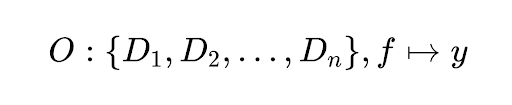
Where Di are individual data sources, and f is a developer-defined transformation (aggregation, filtering, computation). The output y is an on-chain data feed that protocols can consume.Hyperliquid’s HIP-3 Perp Market Structure
HyperCore vs HyperEVM
Hyperliquid operates two complementary networks:
HyperCore — a high-performance matching engine for perps. Optimized for throughput, but not programmable.
HyperEVM — an EVM-compatible chain for deploying smart contracts, dApps, and oracles. Serves as the programmable layer.
In short: HyperCore = execution engine, HyperEVM = programmable layer.
HIP-3: A Summary
Hyperliquid Improvement Proposal 3 (HIP-3) introduces the structural framework for perpetual futures markets on the Hyperliquid exchange. HIP-3 defines how perps are created, maintained, and settled within Hyperliquid’s system. At its core, HIP-3 establishes:
Perpetual contract specification (underlying asset, margin requirements, funding mechanism).
Price oracle requirement (reliable mark price to prevent manipulation).
Market lifecycle rules (listing, order matching, risk controls).
Thus, HIP-3 is the rulebook ensuring that Hyperliquid’s perp markets can function trustlessly, with oracle feeds as a foundational input.
SEDA Sophon Solver for HIP-3
HyperCore has a strict construct for updating oracle pricing that requires direct SDK interaction via API. To support a new network, SEDA deploys a Prover Contract that allows permissionless data distribution. The SEDA Prover is live on HyperEVM where it already enables permissionless, decentralized access to feeds for over 11 million assets. In the case of HyperCore, SEDA has built a proprietary endpoint that acts as a specialized Solver, termed Sophon.
Developers build their Oracle Program on SEDA to fetch data that include weighting algorithms which then deliver the outputs to SEDA and later to HyperCore via an authenticated API. This supports HIP-3 markets in maintaining permissionless, trustless, and fully authenticated data flows, while adapting to HyperCore’s strict update mechanism.
Future Improvements for Pricing Illiquid Assets
HIP-3 expands Hyperliquid’s design space by allowing builders to deploy perpetual markets on virtually any asset. While this flexibility enables broad market coverage, it also introduces challenges: certain assets may be thinly traded or operate with lower-frequency oracle updates. This limited update cadence reduces price granularity, constrains responsiveness to market shifts, and increases friction for market makers attempting to quote efficiently.
SEDA addresses this constraint by enabling Oracle Programs that directly incorporate real-time spot pricing from HIP-3 perpetual markets. These on-chain programs can be configured to blend primary private data sources from traditional markets with HIP-3 spot pricing, resulting in a robust, cross-oracle price feed. The result is an oracle pricing flywheel:
1. Higher trading velocity in perps produces more frequent price signals.
2. SEDA Oracle Programs ingest these signals, reducing oracle latency from daily → hourly → per-block frequencies.
3. Secondary market arbitrage emerges, as market makers exploit deviations between perp-implied prices and secondary trading levels.
4. This arbitrage leads to increased liquidity and trade frequency in secondary markets.
5. More data becomes available, reinforcing the oracle’s pricing granularity and further tightening market efficiency.

where Vperps is perpetual trading velocity and Vsecondary is secondary market trading volume. As Vperps grows, the oracle naturally increases its update frequency foracle.
Conclusion
The deployment of SEDA Sophon within HIP-3 marks a decisive step forward in oracle infrastructure. Sophon demonstrates that high-frequency, authenticated, and permissionless oracle delivery is not only possible but can scale across asset classes previously considered illiquid.
By enabling verifiable data flows, SEDA provides the tools to build cutting-edge oracle infrastructure for HIP-3 and positions itself to power the next generation of markets across the Hyperliquid ecosystem. In effect, SEDA transforms oracles from static data relays into programmable infrastructures for data access and delivery.